
Friday, July 10, 2026 – The technology sector stands at the center of an unprecedented era of transformation, driven by an "investment supercycle" in artificial intelligence that is redefining the global economic landscape. The figures are clear: AI is no longer a futuristic promise but the dominant driver of spending and innovation, with profound implications for markets and operators.
The Colossal Wave of Investments in AI Infrastructure
2026 is establishing itself as the year of massive investments in AI infrastructure. Global tech giants are collectively committing nearly 700 billion dollars to AI infrastructure, marking a 55% increase compared to the approximately 246 billion dollars spent in 2025. This wave of spending surpasses the combined previous investment peaks of the dot-com era, the mobile revolution, and the first phase of cloud computing.
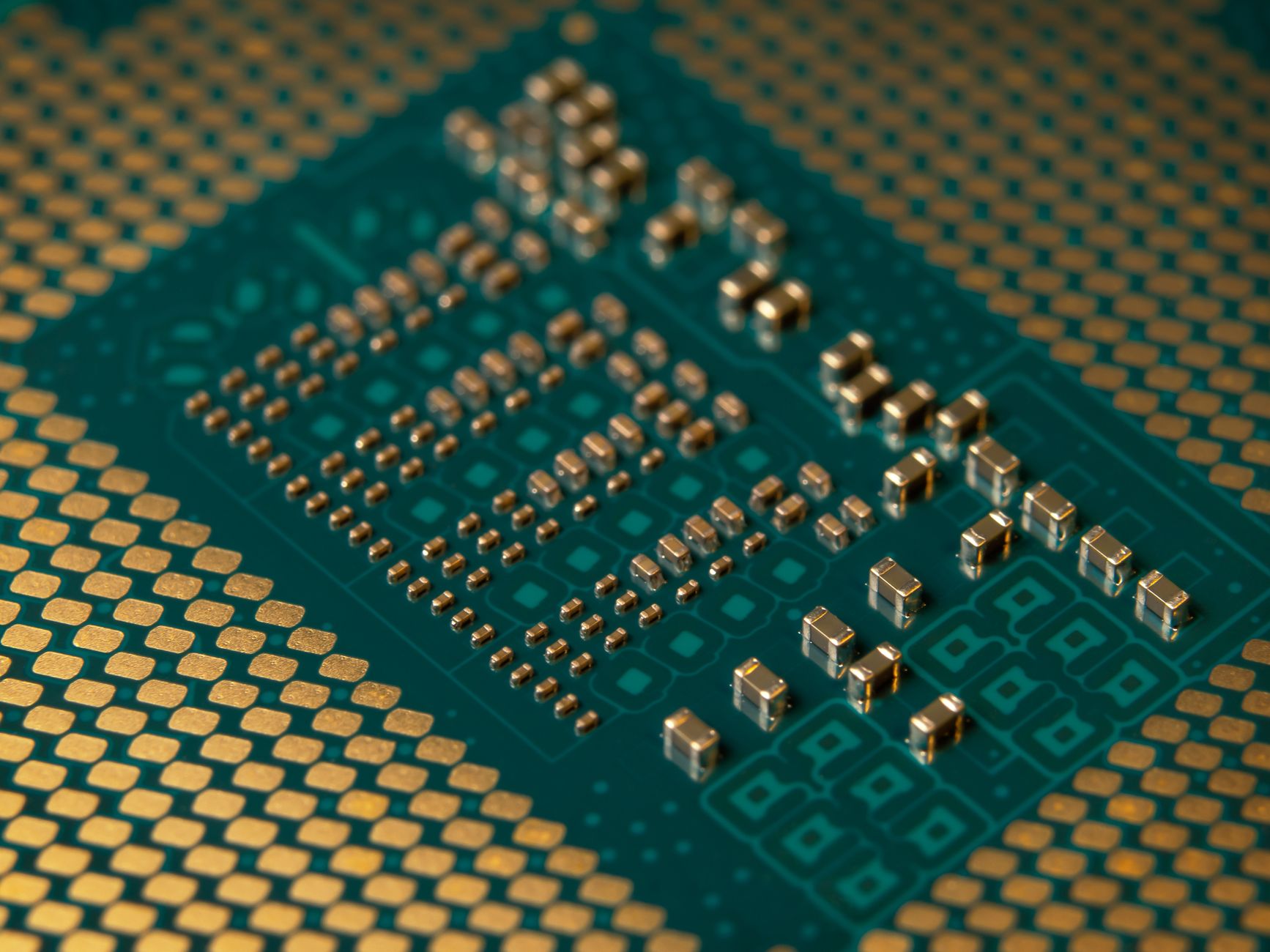
Photo: ed br / Pexels
The main "hyperscalers" are at the forefront:
- Amazon has committed approximately 200 billion dollars to AI infrastructure.
- Google has allocated between 175 and 185 billion dollars.
- Microsoft has earmarked 150 billion dollars.
- Meta is investing between 70 and 72 billion dollars, with some estimates revising the forecast upwards, to between 125 and 145 billion dollars overall, and a recent announcement for an AI data center exceeding 9.1 billion dollars in Canada, the largest outside the United States.
These are not mere announcements, but "committed expenditures supported by signed contracts for GPU, land acquisitions for data centers, and long-term power purchase agreements that will shape the electricity grid for decades." Structural AI demand from businesses, cloud infrastructure expansion, and edge computing implementation will support this sector for years.

Photo: Markus Winkler / Pexels
The AI Market in Full Growth and Semiconductor Protagonists
The global AI market is projected to reach 2.59 trillion dollars in 2026, with a 47% year-over-year growth, according to Gartner. This expansion is driven by the need for capacity, making AI infrastructure the largest segment of the market, representing over 45% of spending. Statista's forecasts indicate a growth in the global AI market from 94.81 billion dollars in 2020 to 1.675 trillion dollars by 2031, with a 17.7-fold expansion in a decade. In particular, generative AI is the fastest-growing segment, with a projected expansion from 37.87 billion dollars in 2024 to 442 billion dollars by 2031.
In the semiconductor sector, Nvidia maintains a dominant position with 70-80% of the AI chip market share, projecting data center revenues exceeding 60 billion dollars by 2026. However, AMD is emerging as a "credible challenger," with its stock gaining 114% in 2026 compared to Nvidia's 37%. AMD's data center revenues reached 5.8 billion dollars in Q1 2026, a 57% year-over-year increase, and forecasts indicate GPU revenue growth of 114% to 15 billion dollars in 2026. Micron Technology (MU), a producer of high-bandwidth memory, has also announced an investment plan of over 250 billion dollars in the United States by 2035, surpassing previous June estimates.
Anticipation for Second Quarter Earnings and Market Volatility
The Q2 2026 earnings season, which will kick off in mid-July, is awaited with great interest. Current estimates predict S&P 500 earnings growth of 24.0% year-over-year, with the technology sector expected to see a surge of 48.5%. The "Magnificent Seven" (Microsoft, Meta, Amazon, Apple, Nvidia, Alphabet, Tesla) are seen as the main drivers of this growth.
However, analysts warn that expectations might be "overly optimistic" for some technology companies, particularly hyperscalers, raising the risk of a correction if earnings do not exceed already high forecasts. June 2026 was characterized by some volatility for AI-related stocks, with the Magnificent Seven registering a decline of approximately 12.7%. Despite this, the market showed resilience, with the Nasdaq Composite closing Thursday, July 9, 2026, up 1.3% thanks to the performance of AI giants, and the S&P 500 less than 1% from its all-time high.
The Complex Regulatory Scenario and Future Risks
In parallel with market expansion, the regulatory landscape around AI is rapidly becoming more complex. The U.S. Federal Trade Commission (FTC) requested public comments on July 1, 2026, on a proposed policy addressing deceptive practices in AI systems, particularly concerning the accuracy, objectivity, and reliability of the systems. In Europe, the EU AI Act, although with extended compliance deadlines (high-risk systems by December 2027, AI incorporated into regulated products by August 2028), already has fundamental requirements in force since February 2025 and foresees hefty penalties (up to 35 million euros or 7% of global annual turnover for the most serious violations). Also at the state level in the United States, legislative activity on AI is intense, with 109 state AI laws enacted by July 1, 2026. Internationally, the United Nations held its first Global Dialogue on AI Governance on July 6-7, 2026, in Geneva, calling for urgent AI governance to mitigate risks and harness its development potential.
Conclusions: A Growth Horizon with Headwinds
July 2026 sees the technology sector, driven by artificial intelligence, in a phase of robust expansion and monumental investments. The prevailing thesis is that the AI infrastructure "supercycle" of investments will continue to generate significant opportunities for investors. However, the pressure to convert these massive capital outlays into sustainable profits will be a focal point during the upcoming earnings season. Furthermore, the rapid development of a global regulatory framework, while necessary for public trust, introduces an element of uncertainty and additional costs. Investors will need to navigate cautiously between the potential for exponential growth and the risks associated with high valuations, stringent regulation, and the long-term sustainability of expected returns.
Disclaimer: This article is for informational purposes only and does not constitute investment advice in any way. Investment decisions must be made independently and with the advice of qualified professionals.