

Retail sales in the Eurozone recorded an unexpected increase of 0.5% on a monthly basis in July 2026, according to preliminary data from the Statistical Office of the European Union (Eurostat) published on Friday, August 7. This figure, higher than analysts' expectations of +0.2%, offers a cautious sign of economic resilience, despite a still subdued consumer confidence picture.
The increase in sales comes after a slight contraction of 0.2% recorded in June 2026 and suggests that, at least for the moment, inflationary pressures and high interest rates have not completely stifled household spending in the euro area.

Key retail sales figures in July 2026
Eurostat data, released just before the weekend of Saturday, August 8, 2026, show growth primarily driven by non-food items.
- On a monthly basis: retail sales increased by 0.5% in July 2026 compared to June 2026.
- On an annual basis: compared to July 2025, sales marked a +1.2%, a modest but still positive increase after weaker results in previous months.
- Driving sectors: non-food items registered a monthly increase of +0.8%, while sales of food, beverages, and tobacco remained more stable, with an increase of 0.1%.
This improvement, although marginal, indicates a possible easing of supply chain tensions and a certain desire to purchase on the part of consumers.

Why does consumer confidence remain in negative territory?
Despite the positive sales figures, consumer sentiment in the Eurozone continues to show caution. The European Commission's consumer confidence indicator for July 2026, also published in recent days, stood at -13.5 points, a slight improvement compared to -15.0 in June 2026, but still well below the long-term average.
This suggests a discrepancy between current spending capacity and future expectations. Consumers may be influenced by:
- Persistent inflation: although slowing in some areas, prices remain high compared to a year ago, eroding purchasing power.
- Uncertain economic outlook: concerns about a potential recession or labor market stability could lead to caution.
- High financing costs: interest rates on loans and mortgages remain high, curbing long-term purchases and household investments.
This caution is reflected in the tendency to save or to allocate spending to essential rather than discretionary goods, despite the temporary July peak.
What are the implications for the European Central Bank (ECB)?
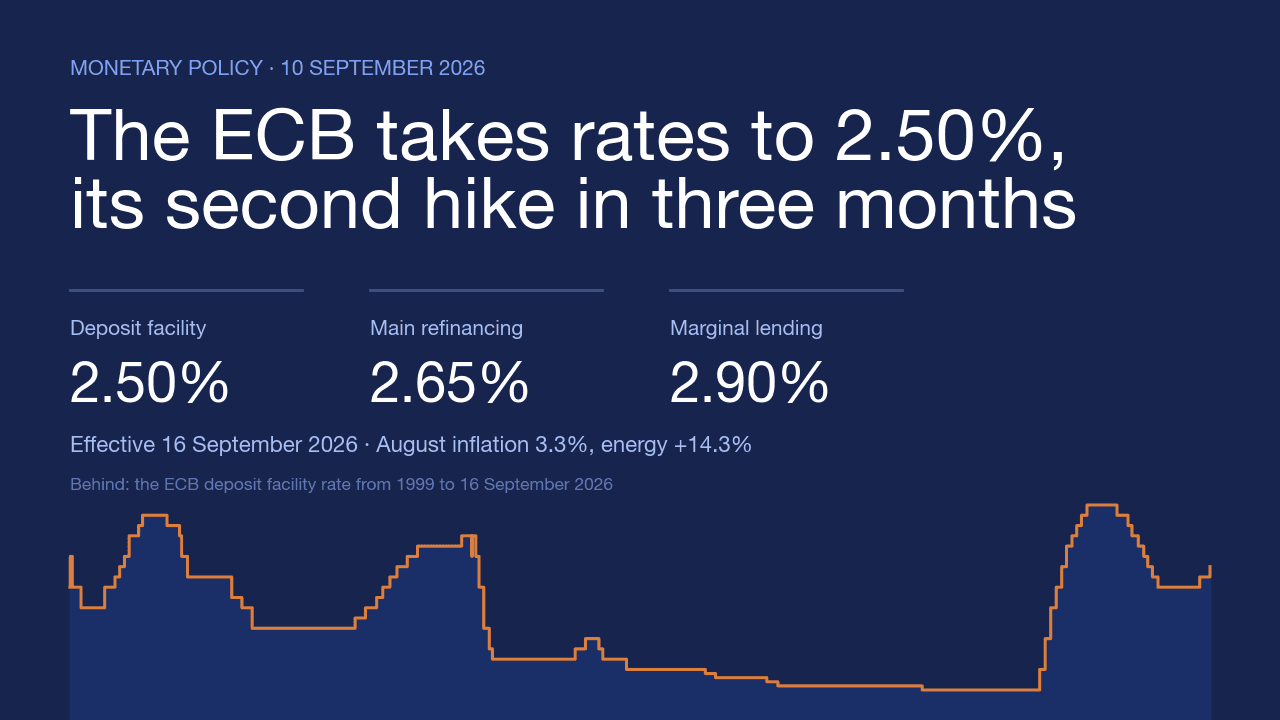
The conflicting signals from the July 2026 data complicate the European Central Bank's (ECB) assessment ahead of upcoming monetary policy decisions.
- Inflationary pressures: an increase in retail sales, if persistent, could fuel demand and, consequently, price pressures, making it harder to bring inflation back to the 2% target.
- Economic growth: more vibrant consumer activity is a fundamental pillar for the growth of the Eurozone's gross domestic product (GDP), offering a glimmer of hope against recent economic slowdown prospects.
- Future strategy: the ECB, which has maintained a cautious stance in recent months, might be forced to assess whether the improvement in sales is an isolated figure or the beginning of a more robust recovery, which could influence future interest rate decisions.
The European Central Bank, in its most recent economic bulletin, reiterated its commitment to closely monitor all incoming data to best calibrate its policy.
Outlook for citizens and businesses in the Eurozone
For Eurozone citizens, the unexpected increase in retail sales in July 2026 could represent a signal of stabilization, but the persistent caution regarding confidence suggests that purchasing power and spending decisions remain under observation. Households continue to navigate an environment of high costs and economic uncertainty.
For businesses, particularly those in the distribution and retail sectors, the July 2026 figure is a boost of confidence. However, the challenge remains to stimulate sustainable demand in an environment where consumers are still hesitant to commit to significant purchases. Pricing and marketing strategies will need to remain flexible and targeted, aiming to intercept the changing needs of a still volatile market.