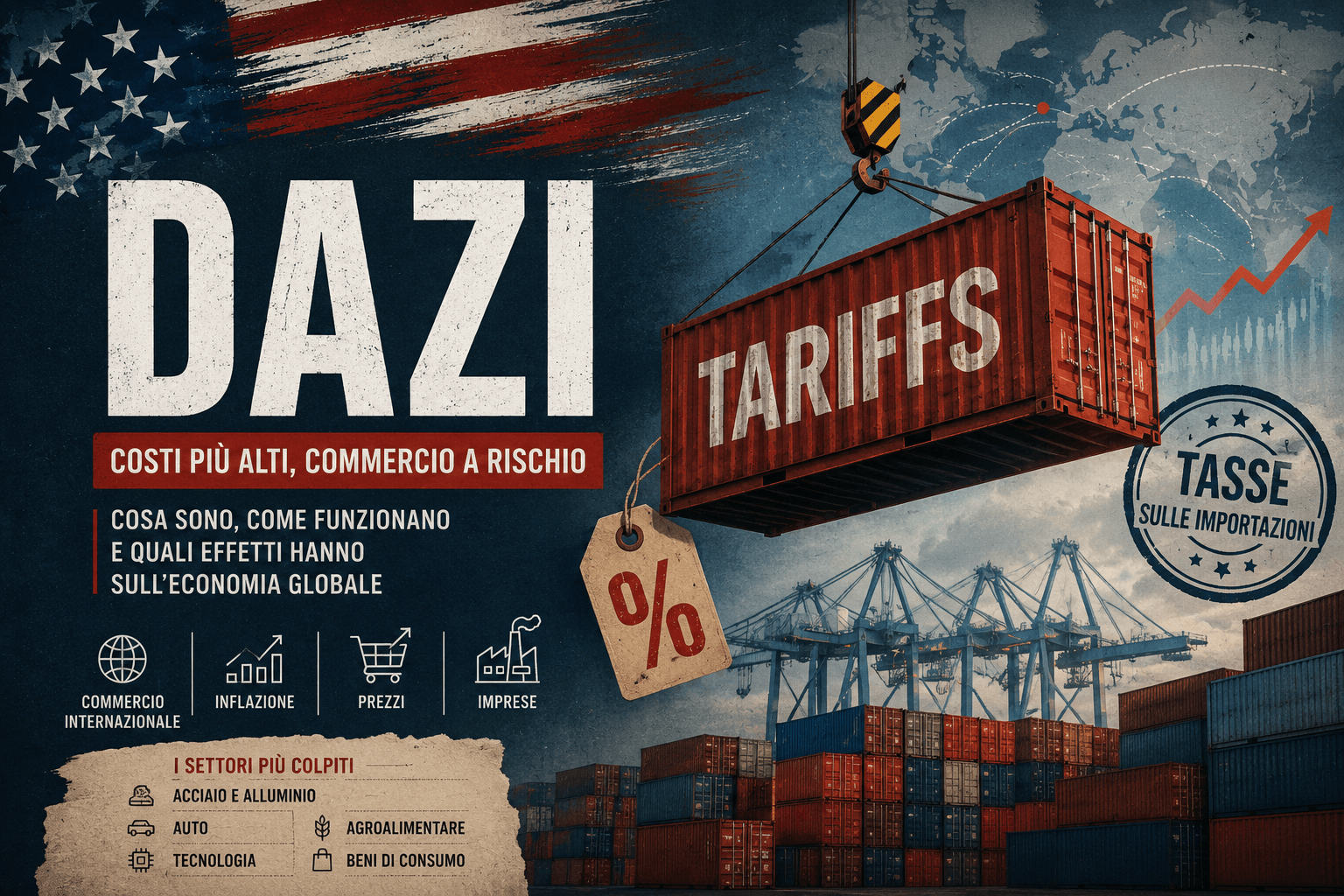
Friday 24 July 2026 opens with the entry into force of the new US tariffs justified as a measure against forced labour, a move that adds a further element of uncertainty to an already nervous week for markets. The new duties come on top of concerns about the cost of artificial intelligence, the fall in chip stocks and geopolitical tensions in the Middle East, while Washington simultaneously opens a new trade front with the European Union.
The new US tariffs and the front with Europe
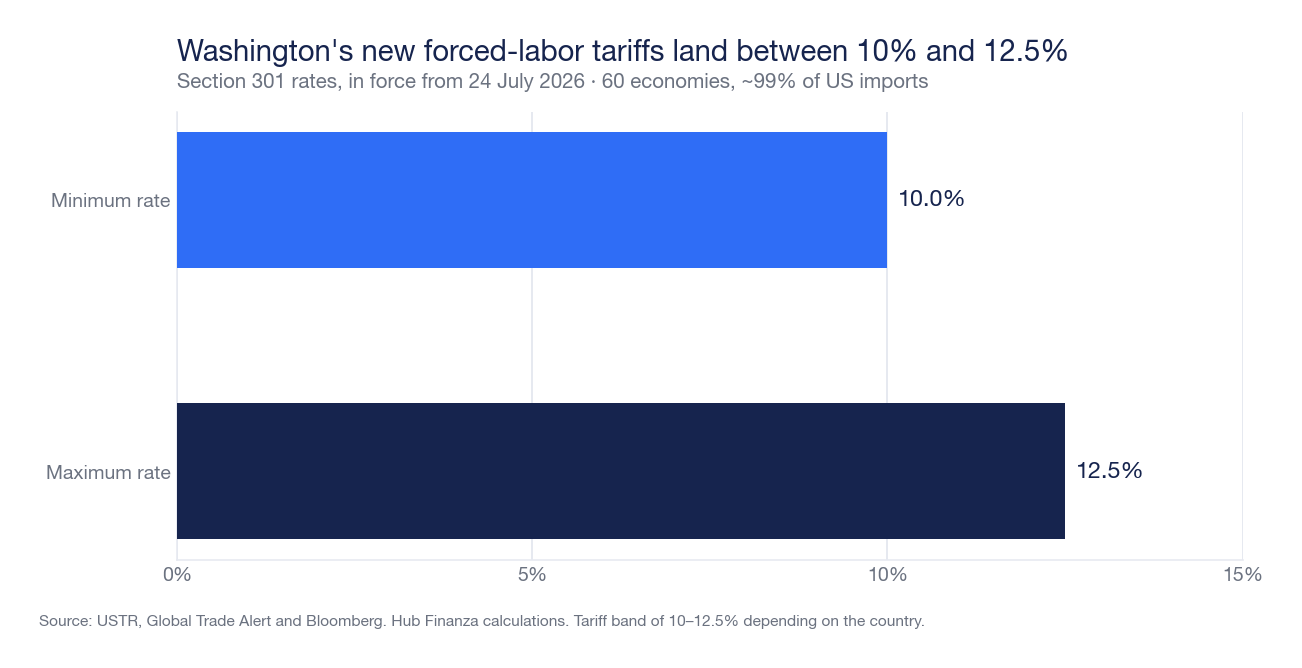
The tariffs that took effect at 00:01 (East Coast time) on Friday 24 July 2026 are a Section 301 measure announced by the Office of the United States Trade Representative (USTR) on 23 July: they hit imports from 60 economies, with rates ranging from 10% to 12.5% depending on the country. The official rationale is countering forced labour: Washington accuses its partners of enforcing bans on goods produced with coerced labour insufficiently. The list includes, among others, Canada, Mexico, China, India, Vietnam, the European Union, the United Kingdom, Japan, South Korea, Taiwan and Switzerland: together roughly 99% of US imports, with some specific exemptions.
Separate but complementary is the front opening with Brussels. Also on Friday, President Donald Trump announced the "immediate" launch of a new Section 301 investigation into the European Union's trade practices, threatening tariffs in retaliation for the fines imposed on large American technology companies. The reference is to the penalties levied on Google — a €2.95 billion fine (around $3.45 billion) for anti-competitive practices in ad tech, on top of an earlier €890 million penalty — with Trump also citing Apple, Meta and Amazon among the companies he claims have been "excessively" fined. An investigation which, if it confirms trade practices deemed unfair, could translate into new tariffs on European goods, straining already fragile relations.
How equity markets reacted
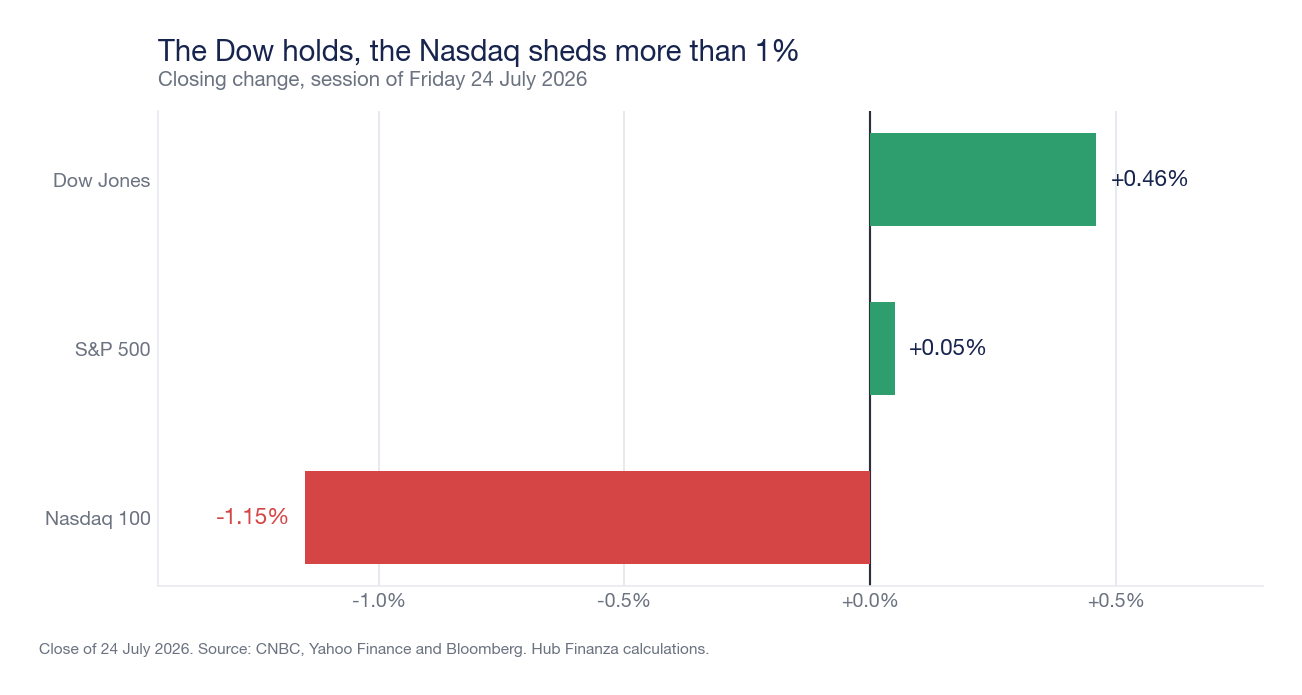
On Wall Street, Friday's session closed in mixed order, without the full rebound some traders had expected after Thursday's decline. The Dow Jones Industrial Average (^DJI) gained 0.46%, to 51,947.25 points (+235.60), while the S&P 500 (^GSPC) closed essentially flat, up just 0.05% at 7,411.98 points. The technology-heavy Nasdaq 100 (NDX) moved sharply the other way, shedding 1.15% to 28,128.34 points, still weighed down by selling in chips.
The weekly picture remains negative: all three main indices closed lower, with the S&P 500 down around 0.6% and the Nasdaq down about 2% over the five sessions. It is the second consecutive week in the red for the S&P 500 and the Nasdaq, a sign of cooling after the run of previous months, fuelled by doubts over spending on artificial intelligence, the rise in oil and tensions in the Middle East.
Tech and chips under pressure
The heart of the selling is once again technology. On Thursday 23 July the shares of the seven largest technology companies (the "Magnificent Seven") collectively burned nearly $800 billion of market value, in a day dominated by worries about the rising cost of investment in artificial intelligence.
Intel (INTC) is emblematic: the stock lost almost 8% on Friday despite quarterly results above expectations — earnings per share of $0.42, roughly double the estimates, and revenue of $16.1 billion — penalised by its capital spending plans, expected to exceed $20 billion in 2026. Weakness was widespread among memory makers too, with SanDisk down almost 11% and generalised selling across the semiconductor sector.
The backdrop: oil, bonds and macro
Beyond trade tensions and technology volatility, the picture is shaped by other factors:
- Oil: Brent closed around $96.8 a barrel (down about 4% on the day) and WTI around $89 (down roughly 3%). Both remain higher on the week after touching $100 in the preceding days, supported by tensions in the Middle East; news of possible talks between the United States and Iran then eased the pressure.
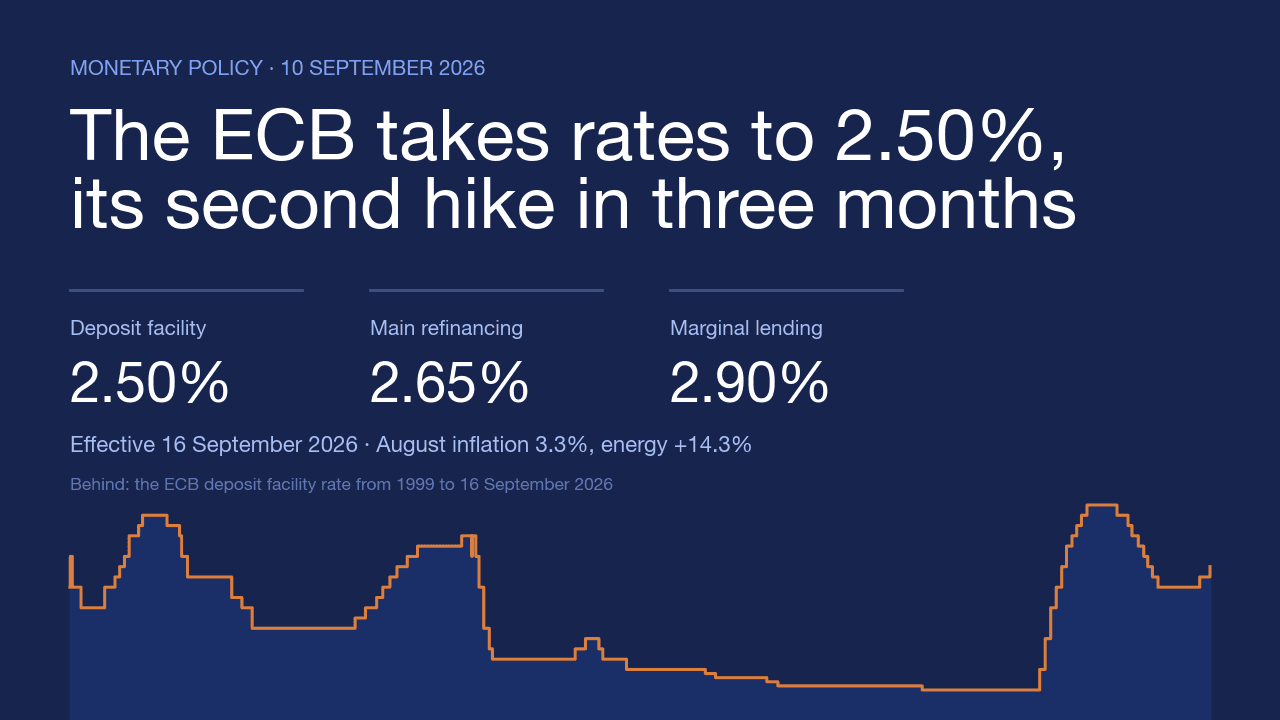
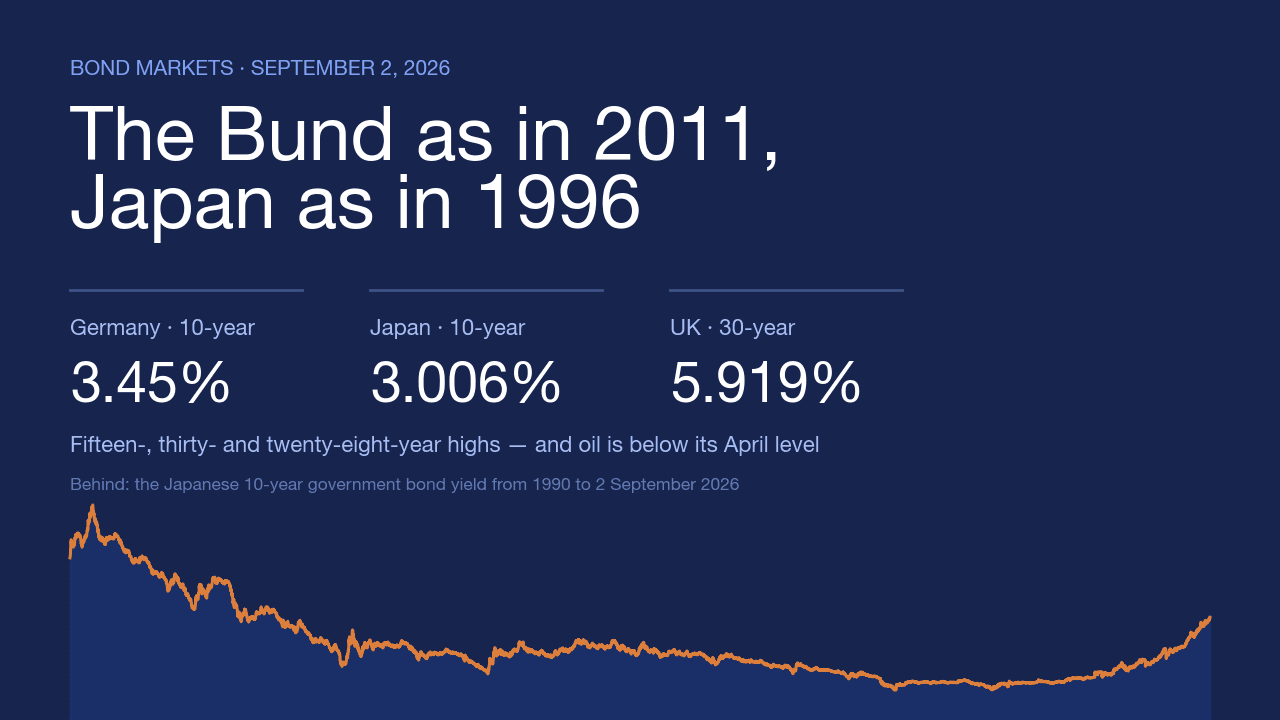
- Bond yields: yields remain elevated, adding pressure on financing costs and reducing the relative appeal of equities.
- US economic activity: according to S&P Global's flash PMI data, US economic activity grew in July at its fastest pace in eight months, helped in part by the football World Cup hosted in North America.
In short, markets are navigating between opposing forces: new trade barriers, doubts about returns on artificial intelligence investment and expensive energy that complicates the path of disinflation. For investors, the search for stability remains an open challenge.
Market data refers to the close of Friday 24 July 2026, cross-checked against public sources (CNBC, Yahoo Finance, Bloomberg, USTR/Global Trade Alert) and subject to revision. Hub Finanza charts are for illustrative purposes.
Disclaimer: the information provided in this article is purely informational and does not constitute personalised financial advice in any way. We recommend consulting a professional before making any investment decision.