On Wednesday, July 29, 2026, the Federal Reserve left interest rates unchanged in the 3.50%-3.75% range, the fifth consecutive meeting without a move. The decision was widely anticipated by markets, but the real earthquake of the day did not come from the Fed's statement: it came later, on the stock market, where Wall Street first celebrated and then crashed within a few hours.
The Fed's board divided: three votes for a hike
The Federal Open Market Committee approved the decision with 9 votes in favor and 3 against. Voting against the freeze, requesting a quarter-point hike (25 basis points), were three regional Fed presidents: Beth Hammack (Cleveland), Neel Kashkari (Minneapolis), and Lorie Logan (Dallas). In the official statement, the Fed specified that the three "would have preferred to raise the target range for the federal funds rate by a quarter percentage point at this meeting".
It is the second meeting led by Kevin Warsh, who took office as Fed chairman on May 22, 2026, after the end of Jerome Powell's term. A detail worth noting: Powell did not leave the board. His term as governor will expire in January 2028, and he chose to remain in his position — a rare circumstance for a former Fed chairman, which fuels the political tensions discussed further below.
Warsh's words: economic resilience, but inflation still "an open problem"
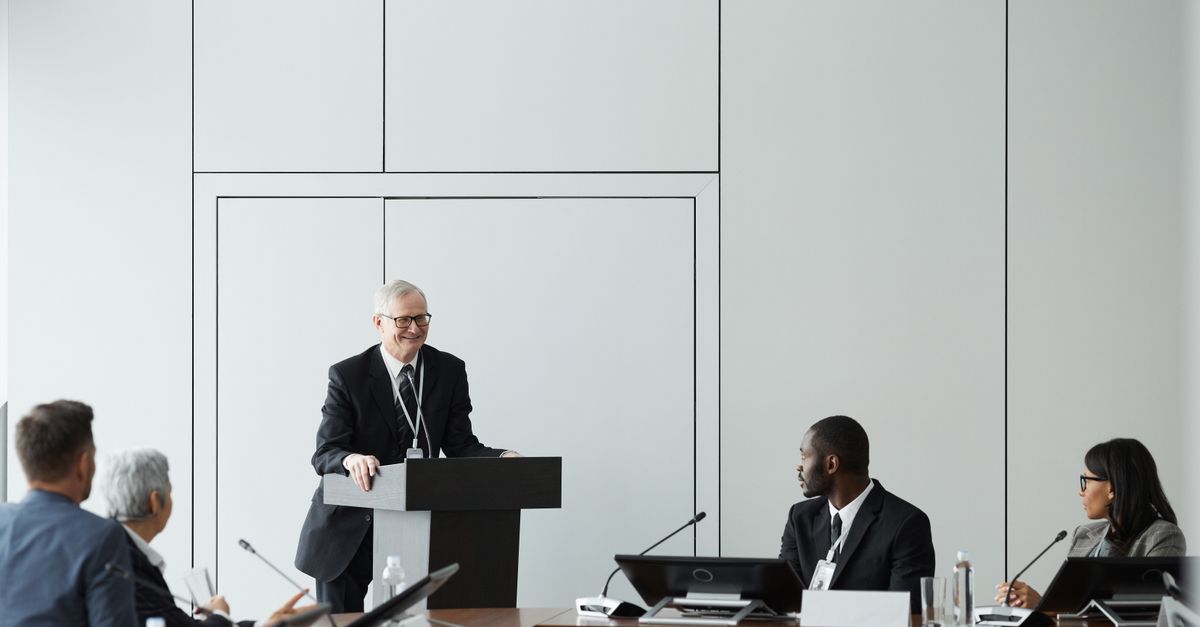
In the post-meeting press conference, Warsh justified the decision not to move rates by emphasizing the solidity of the American economy, described as expanding at a sustained pace despite uncertainty linked to the conflict in the Middle East. On the labor front, employment reportedly kept pace with labor force growth, with a stable unemployment rate; productivity and capital investment remain robust.
On the price front, however, the tone remains firm: inflation is still above the 2% target, partly due to supply-side shocks related to the energy sector. Warsh reiterated that there is no "soft" version of the inflation target — it is 2%, period — and that over five years of above-target inflation cannot be resolved in a few weeks or with a single month of cooler data.
The July meeting is the fifth consecutive meeting with rates held steady, and markets today are pricing in about two 25-basis-point hikes by the end of 2026, according to June's "dot plot" — a sharp shift from expectations of just a few weeks ago, when cuts were still being discussed.
Why Warsh did not want to raise rates
The picture behind Warsh's decision is more layered than a simple reading of macro data:
Personal conviction: Warsh does not believe a tightening is necessary at this time, despite having repeatedly called inflation "a choice" that needs correction.
Fed communication reform: Warsh has created five internal task forces to rethink price analysis, the use of artificial intelligence, and central bank communication. His mandate began with a deliberate cut in "forward guidance": shorter statements, fewer indications on the future path. A premature hike would have complicated this reform process.
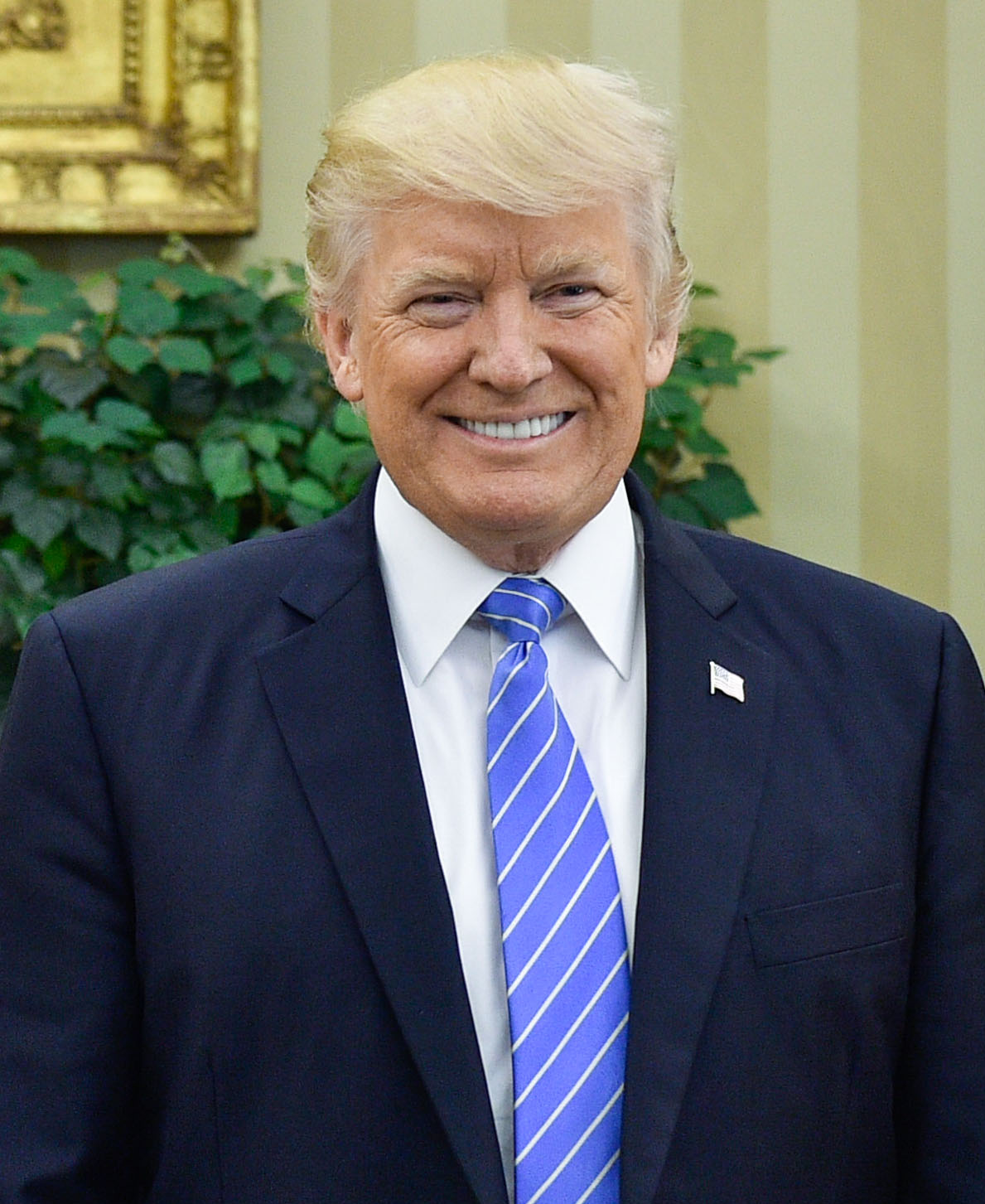
Political variable: Trump has repeatedly called for "the lowest rates in the world" and described the Fed board as "politicized". Warsh, according to several American sources, would be interested in avoiding a hike that exacerbates the clash with the White House — also because a new attack on Powell (who remains on the board) could accelerate his departure and open up the possibility for Trump/Warsh to place a more aligned member.
D.J. Trump - P.O.T.U.S. - Commons
What really happened in the markets: first relief, then a crash
Before the decision (2:00 PM ET / 8:00 PM CEST): Wall Street had already been under pressure for days. Semiconductor stocks led a sell-off linked to fears about capital expenditure for artificial intelligence and a presumed Chinese technological leap in chip-making, with the Nasdaq reaching about 9% below its June highs. On the geopolitical front, the United States and Saudi Arabia had just conducted attacks against Iran-linked militias in Iraq, amidst a direct US-Iran military confrontation that has kept oil prices high for months. In this climate, the market even feared a surprise hike.
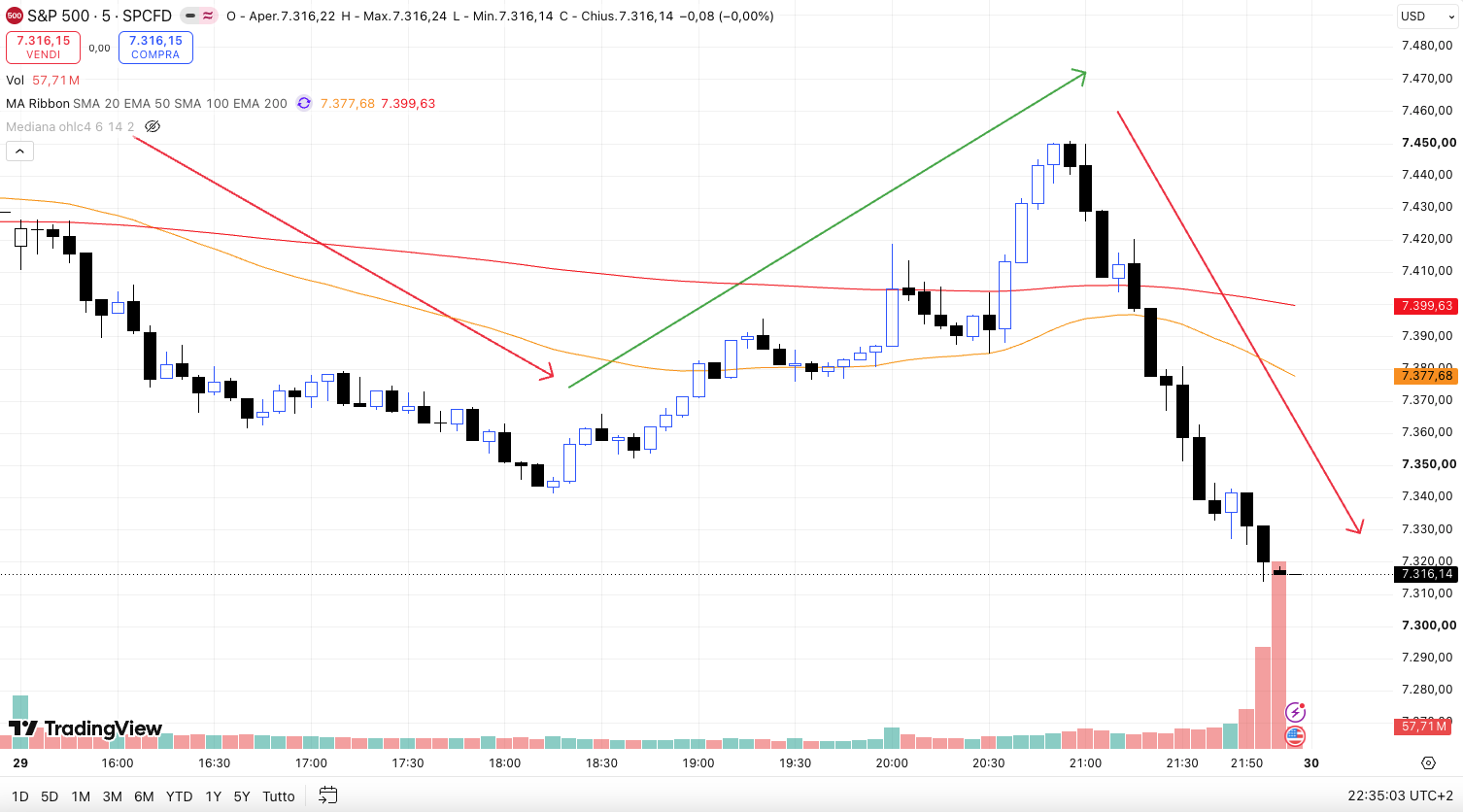
In the hour following the announcement, the S&P 500 erased its entire intraday decline: the index had fallen during the morning, hit lows just before 2:00 PM, and within an hour of the decision, recovered all lost ground, temporarily returning to positive territory. This is the classic "relief rally": no surprise hike, immediate relief, with market capitalization growing by about $1 trillion from the session lows.
That same rally, however, completely reversed in the subsequent hours, with an estimated loss of over $1.1 trillion in capitalization from its peak. The reason did not come from equities themselves, but from the bond market: the 10-year Treasury yield rose 7 basis points above 4.67%, while the 30-year gained 10 basis points, exceeding 5.2% — the highest level since 2007. The bond market interpreted the Fed's choice not as caution, but as a possible delay in the fight against inflation, precisely at a time when Warsh removed the market's usual forward guidance compasses. In the session, the Dow Jones closed down about 1,153 points (-2.2%, the worst decline since April 2025), the S&P 500 lost about 1.5%, and the Nasdaq about 1.7%.
In summary: it was not the Fed's decision that moved the market, but the uncertainty that followed. No surprise hike (relief), but also no clear guidance on what will happen in September (nervousness), in a context where bond yields — not stocks — dictated the final direction of the day.
Key takeaways
Fifth consecutive Fed meeting without rate changes; markets now price in two hikes by the end of 2026, no longer cuts.
The board remains divided: three regional presidents out of twelve voters are already calling for a hike.
Warsh's "opaque by design" communication strategy is a paradigm shift from the Powell era, and markets have not fully digested it yet: today's whipsaw reaction (rally and then crash in the same session) is the most direct proof.
The US-Iran conflict remains the key geopolitical variable to monitor: it fuels oil prices, which in turn fuels the inflation the Fed is trying to contain.
The next September meeting is already indicated by several analysts as the first real test to understand whether Warsh will confirm the wait-and-see approach or yield to internal pressures for a hike.
Sources: official Federal Open Market Committee statement (July 29, 2026); CNBC, Bloomberg, CNN Business, NPR, Fox Business, Kiplinger — live coverage of the Fed meeting and Wall Street session on July 29, 2026.