
Over the weekend of 25-26 July 2026, US mortgage rates hit their highest levels of the year, an increase that weighs on the cost of buying a home. According to average data from Zillow's lender marketplace, the rise comes at a time when savers can still count on competitive returns from Certificates of Deposit (CDs): a two-sided picture that revolves, in both cases, around expectations for the Federal Reserve's next moves.
Mortgages: a growing cost for homebuyers
The weekend figures, supplied by Zillow's lender marketplace, show a marked increase across the main mortgage products for buying a first home:
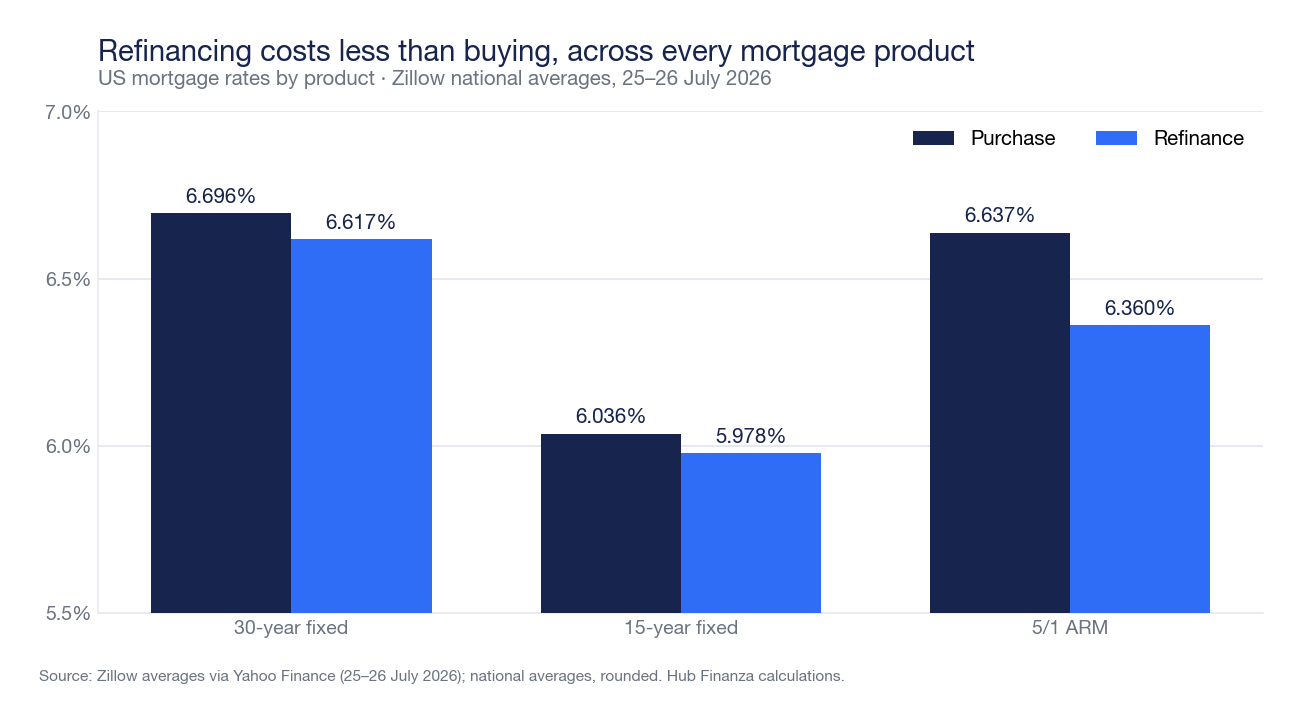
- The 30-year fixed rate rose by 24.1 basis points, reaching 6.696%: the highest level recorded this year.
- The 15-year fixed rate increased by 9.6 basis points, standing at 6.036%.
- The 5/1 ARM (Adjustable-Rate Mortgage) jumped by a full 41.4 basis points, reaching 6.637%.
Those looking to refinance find slightly more favourable terms: the 30-year fixed refinance rate is at 6.617%, the 15-year at 5.978% and the 5/1 ARM at 6.36%. These are all rounded national averages, but the upward trend is clear.
It is important to put the figure in context: although they are the highest of 2026, these rates remain below those of a year ago. "Despite the recent increase, mortgage rates are lower than they were a year ago," noted Yahoo Finance, which adds that house prices are not rising with the intensity seen at the height of the COVID-19 pandemic. The reference to the pandemic therefore concerns the surge in property prices, not the level of rates.
Diverging data and forecasts
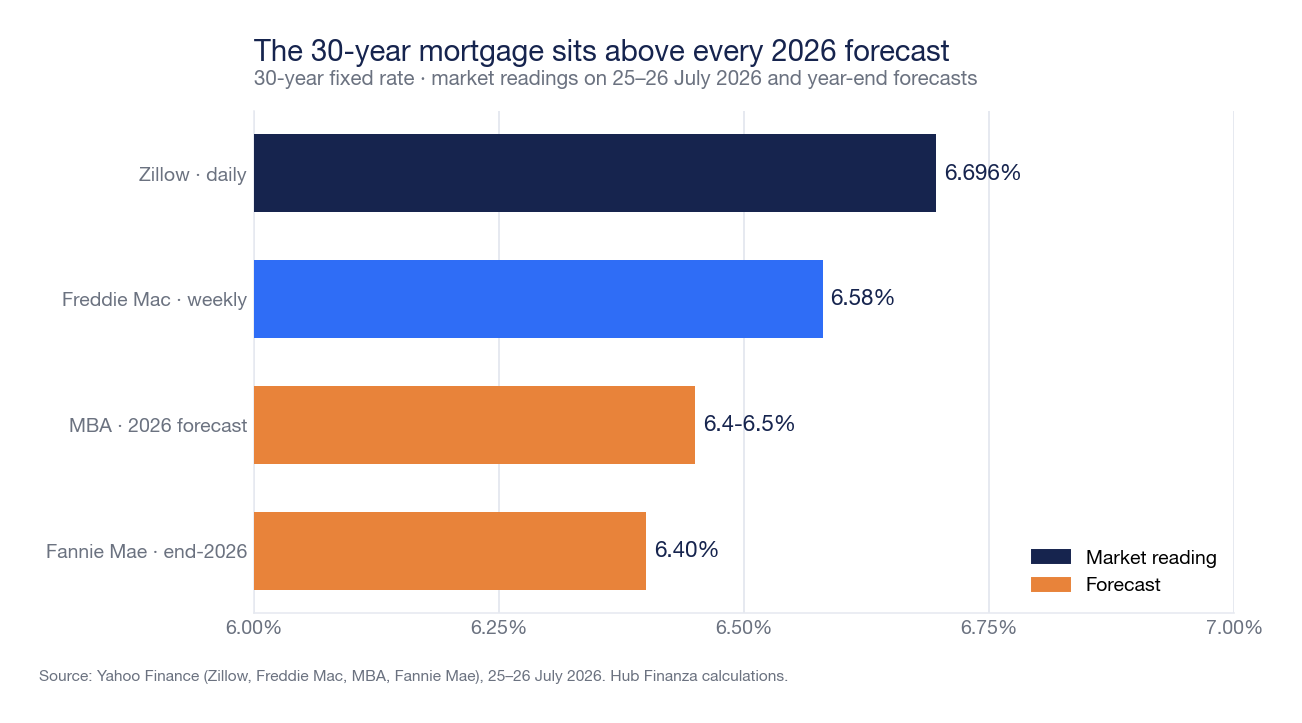
It is worth noting that different sources present slightly different numbers. According to Yahoo Finance, the average 30-year rate reported by Freddie Mac in its weekly survey was 6.58%, just below Zillow's 6.696%. The discrepancy is normal and is attributed to different collection methods: Zillow updates rates daily from its own marketplace, while Freddie Mac processes information from loan applications on a weekly basis.
Forecasts for the coming months point to stabilisation or a slight decline. The Mortgage Bankers Association (MBA) expects the 30-year rate to sit between 6.4% and 6.5% throughout 2026, while Fannie Mae forecasts a 30-year rate of 6.4% by year-end: both estimates therefore sit below current market levels.
Certificates of Deposit (CDs): an opportunity for savers
On the savings side, Certificates of Deposit continue to offer attractive returns. Over the weekend of 25-26 July 2026 the highest CD rate is 4.20% APY, offered by Sallie Mae on its 2-year CD; the same bank offers returns ranging from 3.20% to 4.20% APY, with a minimum deposit of $2,500 and terms from 6 months to 5 years. In general, the best rates are found on shorter terms — around a year or less — especially at online banks and credit unions.
The CD landscape is driven by Federal Reserve policy. After cutting the federal funds rate three times in 2025, the Fed has so far left rates unchanged in 2026. That is why, Yahoo Finance observes, the current window is read by some as "the last chance to lock in a competitive CD rate before rates move further". Savers have several types of CD to choose from, each with specific advantages, sometimes in exchange for a slightly lower return:
- Bump-up CD: allows you to request a higher rate if the bank's rates rise during the term of the account (usually once only).
- No-penalty CD: allows early withdrawals without penalties.
- Jumbo CD: requires a high minimum deposit (often $100,000 or more) and may offer slightly higher rates.
- Brokered CD: bought through a broker, these can offer better rates or more flexible terms, but carry greater risks.
Implications for households and businesses
The current picture suggests that borrowers face higher financing costs when buying a property, a factor which — combined with rates that remain above those at the start of the year — may influence purchase decisions. For savers, by contrast, CDs represent an opportunity to obtain guaranteed returns, especially by locking in competitive rates during a phase of uncertainty over the Fed's next moves.
While the property market shows signs of price stabilisation, high interest rates remain a significant component of the overall cost of a home: one more reason for consumers to compare carefully the offers and the different types of financing and savings products available on the market.
Data refers to the weekend of 25-26 July 2026, compiled by Hub Finanza from Yahoo Finance surveys (Zillow averages, Freddie Mac, MBA, Fannie Mae) and subject to revision. Hub Finanza charts are for illustrative purposes.
Disclaimer: the information provided in this article is purely informational and does not constitute personalised financial advice in any way. We recommend consulting a professional before making any investment decision.